
How Long is the Annapurna Base Camp Trek?

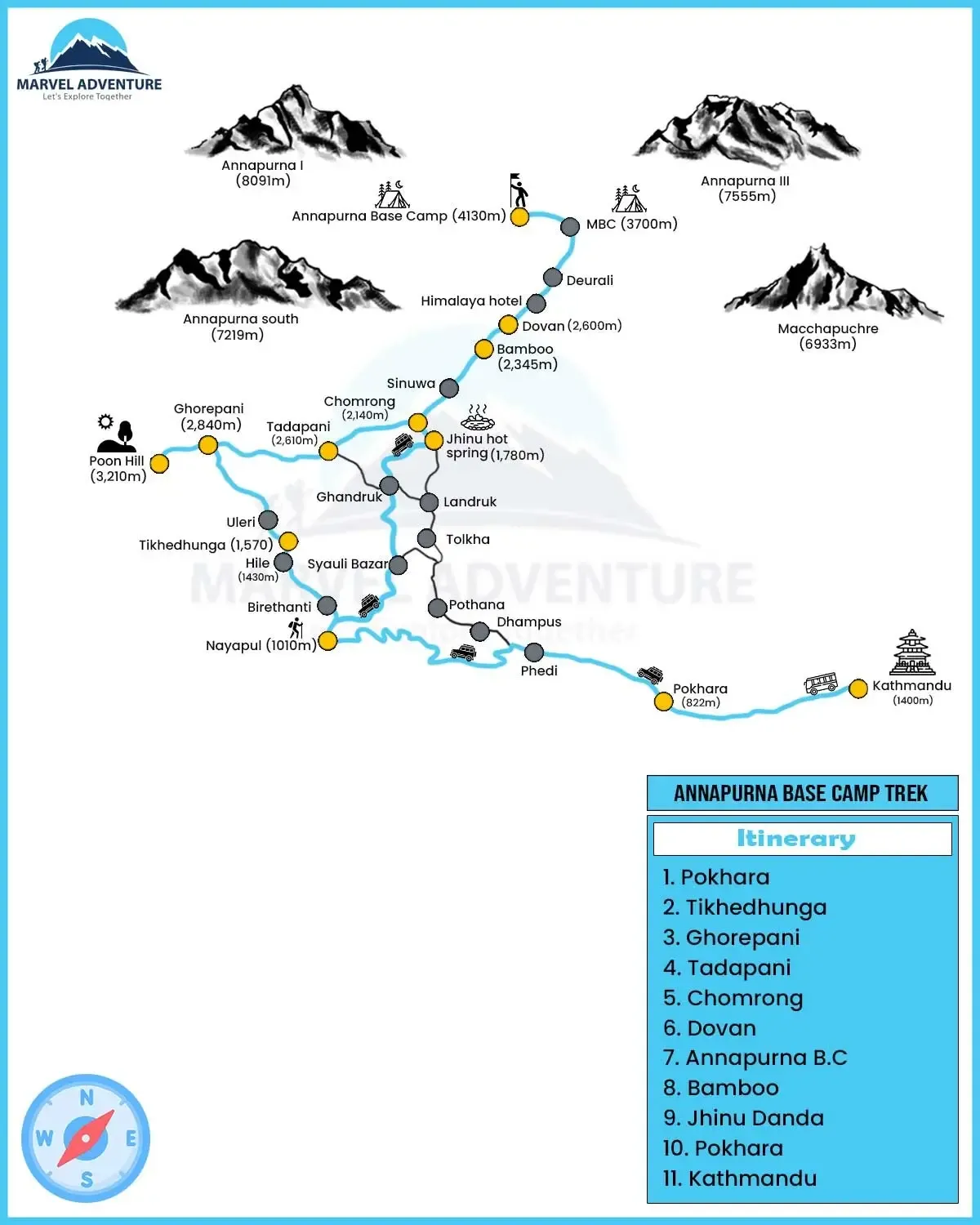
The Annapurna Base Camp Trek distance is about 110 to 120 kilometers round trip. Usually, the journey wraps up within a time frame of 10 to 12 days, allowing for a smooth pace, acclimatization and sightseeing along the way.
The trail starts either from Nayapul or Phedi and goes through beautiful villages like Tikhedhunga, Ghorepani, Chomrong, and Dovan, until finally arriving at the breathtaking Annapurna Base Camp (4130 meters).
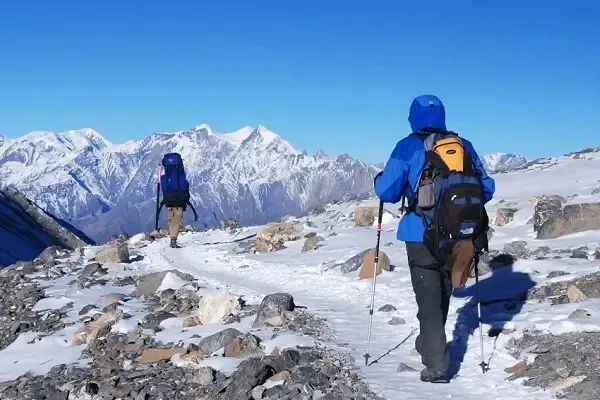
You will be passing through dense subtropical forests, rhododendron hills, and high alpine areas, which constantly offer a rich and scenic experience on the trek.
The average daily distance of trekking is generally from 5 to 12 kilometers, and the walking time may vary from 3 to 7 hours per day, all depending on the ground and the elevation gain.
The slow pace not only allows for proper acclimatization but also ample time in the tea houses to rest, taste the local cuisine and meet the Sherpa and Gurung communities.
How Difficult is the Annapurna Base Camp Trek?
The Annapurna Base Camp Trek is graded as moderate to challenging in terms of difficulty. Although it is not necessary to possess the technical climbing skills, it is mandatory for the trekkers to have good fitness. This is because the trek involves long hours of walking, steep climbs and the constantly changing terrains.
The daily hikes vary between 5 and 12 kilometers over rocky trails, staircases and sometimes even river crossings. The part of the trek which is usually between Chomrong to Dovan and further to the Annapurna Base Camp feels even more challenging due to the altitude gain. Hence a slow but steady pace along with proper resting times is very important.
Since the trek goes all the way to 4,130 meters at the Base Camp, acclimatization is necessary to prevent mountain sickness. For this reason, packers are recommended to take the required rest or do not ascend too fast along the route.
This trek can be undertaken by all healthy individuals with proper preparation and a reasonable level of fitness. The breathtaking views of the Himalayas, lively local culture and the sense of achievement that comes with it all count to make the effort worth it.
Annapurna Base Camp Trek Cost
The Annapurna Base Camp Trek cost can be quite different based on many aspects such as the length of the trek, type of accommodation, whether a guide and porter are hired, cost of permits and transport.
Normally, independent trekkers spend about $900–$1,500 per person for a typical 10–14 day hike that includes staying in tea houses, eating, and getting permits. Using a guide or a porter, choosing a private vehicle, or lodging in luxurious hotels can all lead to higher prices.
We present a complete Annapurna Base Camp Trek package priced at only $795 per person, which takes care of lodging, meals, services of an experienced guide and porter, permits, and transport.
There are also special group discounts available, which further lower the cost for friends or family traveling together. This package enables you to have a carefree trek, to be mesmerized by the beautiful Himalayan nature, and to be fully part of the adventure and culture of the Annapurna area.
Is Annapurna Base Camp Trek Safe?
The Annapurna Base Camp Trek is a journey that most healthy and fit travelers can take. The routes are all well-marked, and the tea houses at different points on the trail are equipped for feeding, lodging, and taking care of issues like minor injuries or sick guests.
To ensure safety, other measures include hiring a professional guide and porter, walking only on marked paths, and being very alert to the weather changes.
Nonetheless, just like every trek done at high altitudes, the hike comes with the possibility of getting altitude sickness, facing sudden weather changes, slipping on the trails and walking for long hours. Good acclimatization, hydration and pacing are the mainstays in fighting altitude-related problems.
Apart from the above, good trekking boots, the right gear, and travel insurance are also vital. Nevertheless, the ABC Trek is considered safe, rewarding, and open to those travelers who are adventurous and have a moderate fitness level.
Are Guides or Porters Necessary for the Trek?
Although it is possible to hike to Annapurna Base Camp independently it is wise to hire a guide and a porter, especially if you are doing this for the first time or are not familiar with the area.
A professional guide leads you to the right path, makes altitude adjustment, teaches about the local culture and keeps an eye on you to prevent altitude sickness. A porter takes your heavy bag which makes the trip less physically tiring and you get to enjoy the breathtaking views of the Himalayas completely.
Furthermore, besides offering local knowledge, the guides and porters will also be there in case of emergencies and help you with places to stay and eat, thus making the hike more relaxed and less anxious. We offer a trip with knowledgeable guides and porters who will make this outdoor adventure safe, easy and remarkable!
Where Will You Stay on the Trek?
During the Annapurna Base Camp Trek, you will be accommodated in lodges and tea houses run by local families throughout the journey. These tea houses are not extravagant but are decent enough. They provide clean rooms, warm blankets and hearty meals.
Twin-shared rooms with basic furniture are offered by most tea houses, while some have shared bathrooms in popular villages. Power, Wi-Fi, and hot showers are available at most places you stop, although, in some cases, a small extra payment is necessary.
All the tea houses in this area are wonderful spots to learn about the local culture and the ethnic groups of Gurung and Magar that exist in the vicinity. The warm dining areas are the most convenient places to unwind, exchange tales, and relax after a tiring day of trekking.
To sum up, the amenities may be fundamental but they are hygienic, friendly and they make it possible for you to have a trekking experience that is both safe and unforgettable.
When is the Best Time to Trek to Annapurna Base Camp?
The most appropriate time to go on a trek to ABC is in the spring (March to May) and autumn (September to November) seasons. They provide stable weather conditions with clear skies, mild temperatures and great mountain visibility.
Spring is a riot of colors due to the rhododendron forests in bloom while autumn provides crisp air, dry weather and awe-inspiring views of the snow-covered Annapurna and Machapuchare peaks.
Winter (December to February) is another option for those who like to see the mountains in silence and solitude. Nonetheless, it can get really cold, mainly at night and in the alpine zones. The period from June to August which is the rainy season, is the least favorable time to visit the area, primarily due to the downpour, leeches and muddy trails.
Taking everything into account, the spring and fall are definitely the most favorable seasons to enjoy the Annapurna Base Camp Trek.
What Should You Pack for This Mountain Adventure?
For the Annapurna Base Camp Trek, considering the different temperature conditions, you need to pack a layered clothing system very carefully. The most important items to pack are the breathable base layer, fleece or down jacket, waterproof outer layers, comfy trekking pants, and high-quality hiking boots.
Furthermore, it is crucial not to overlook the warm accessories such as gloves, hats, and thermal socks! A high-quality backpack, trekking poles and a rain cover are also necessary.
Among other items, you should have a refillable water bottle, water purification tablets or a filter, sunscreen, sunglasses, a hat, and a first aid kit. Along with them, you should also pack toiletries, quick-dry towels, and personal medications because the shops are scarce at higher elevations.
In case of electronics, a headlamp, a power bank, and extra batteries should be packed as the charging options may be limited. Finally, take your passport, permits and some cash for small purchases on the trail with you. The right gear and the proper preparation will allow one to experience a safe, comfortable, and unforgettable adventure in the Himalayas.
How Prepared Should You Be?
To complete the Annapurna Base Camp Trek successfully you must have good physical fitness. Plus, your mind must be ready for several days of hiking through changing terrains and altitudes.
Although the trek is not technically challenging, the days will be pretty long, and you will be walking on steep trails, stone steps and uneven paths. So, it is vital to have at least some level of stamina and endurance.
A few weeks of cardio exercises such as hiking, jogging, cycling, or stair climbing will be highly beneficial. Likewise, strength training inlcuding planks, push ups, deadlifts and squats is necessary to upgrade your stamina.
Mental readiness lets you face the changing weather, basic accommodations and scarce luxuries along the trip. With the right mentality and sound physicality, most people could do the trek without any discomfort.
FAQs on Annapurna Base Camp Trek

What Permits Do I Need for the ABC Trek?
You just need the ACAP (Annapurna Conservation Area Project) Permit for the ABC trek. The permit allows for entry into the Annapurna Conservation Area. It is easily available in Kathmandu or Pokhara at the office of the Nepal Tourism Board before starting the trek.
Is This Trek Good for Solo Trekkers?
Definitely, ABC solo trekking can be done and most adventurers go for it. However, it would be safer to take a trek at the time of the year when the trails are crowded, and the teahouses are full.
Also hire a guide or join a small trekker's group for added companionship and use a map or GPS to make sure you’re following the correct path. It is also advisable for solo trekkers to keep in touch with family or guides regularly and to be ready for small emergencies.
What Are the Major Cultural Experiences During the Trek?
The ABC trek is culturally vibrant. Passing through Gurung and Magar villages, you get to see the local lifestyle and architectural heritage. Staying at local families’ houses, you are mostly provided with an opportunity to socialize with the community and share their traditional meals. Moreso, you might find yourselves getting involved in the smaller festivities or ceremonies.
Can I Charge My Devices on Trek?
Most of the tea houses come equipped with charging facilities but the service is not free of cost. It usually adds up to 100–200 NPR per device. Yet, due to the limited supply of electricity, a portable power bank is a must especially for multi-day hikes.
How Crowded is the Trek?
During September–November and March–May, the trails can be quite crowded. Since tea houses fill up quickly, it is wiser to show up early or book rooms in advance. The shoulder seasons see fewer trekkers on the trails, but the weather is usually less predictable.
Can Children and the Elderly Participate in the Trek?
Yes, if they are well-prepared. There should be more resting days in the itinerary and very carefully monitor for high altitude and tiredness. The trek is moderately difficult; thus, it is advisable to be in good health and of a reasonably fit condition.
Is it Possible to Trek Alone or Do I Have to Go Through a Guide?
Yes, the path is well indicated and permits can be acquired by individuals. Nevertheless, it is advisable to take a guide if you are a beginner in trekking or not very familiar with high altitude adventures. A guide will give you much-needed local culture, safety and navigation knowledge.
Where Can I Buy the Trek-related Souvenirs or Local Crafts?
The mountain villages lining the trekking route have several traditional arts and crafts that you can buy as souvenirs. Woolen artifacts, prayer flags, wood carvings and jewelry are some of them. The prices are different and some bargaining is usually expected.
Also Read: