A Typical Day in the Life of an EBC Porter
A porter’s day begins in the darkness of the dawn and ends later than most trekkers realize. Here’s what the Everest Base Camp trek behind the scenes really looks like.
Morning Routine of a Porter
While trekkers are still deep in their sleep after a long day of trekking, porters are already awake. In the kitchen, steam rises as the first cups of tea are poured for the porters.
Our porter, named Dawa, sits on a wooden bench outside with a warm cup of milk tea in his hands. Around him, others are packing the load, testing the straps, and checking their balance with the load they are carrying. This isn’t just any preparation. It’s a craft of the mountains.
Dawa loops his strap twice, adjusts it, then stands and bounces slightly to test the load. We have seen porters adjust their loads multiple times until it feels right, as survival here depends on a small margin. We watch this every season. The small ritual that begins before sunrise even touches the village.
By the time trekkers step outside to enjoy the early morning mountain views, the porters are ready.
The Journey Between Villages
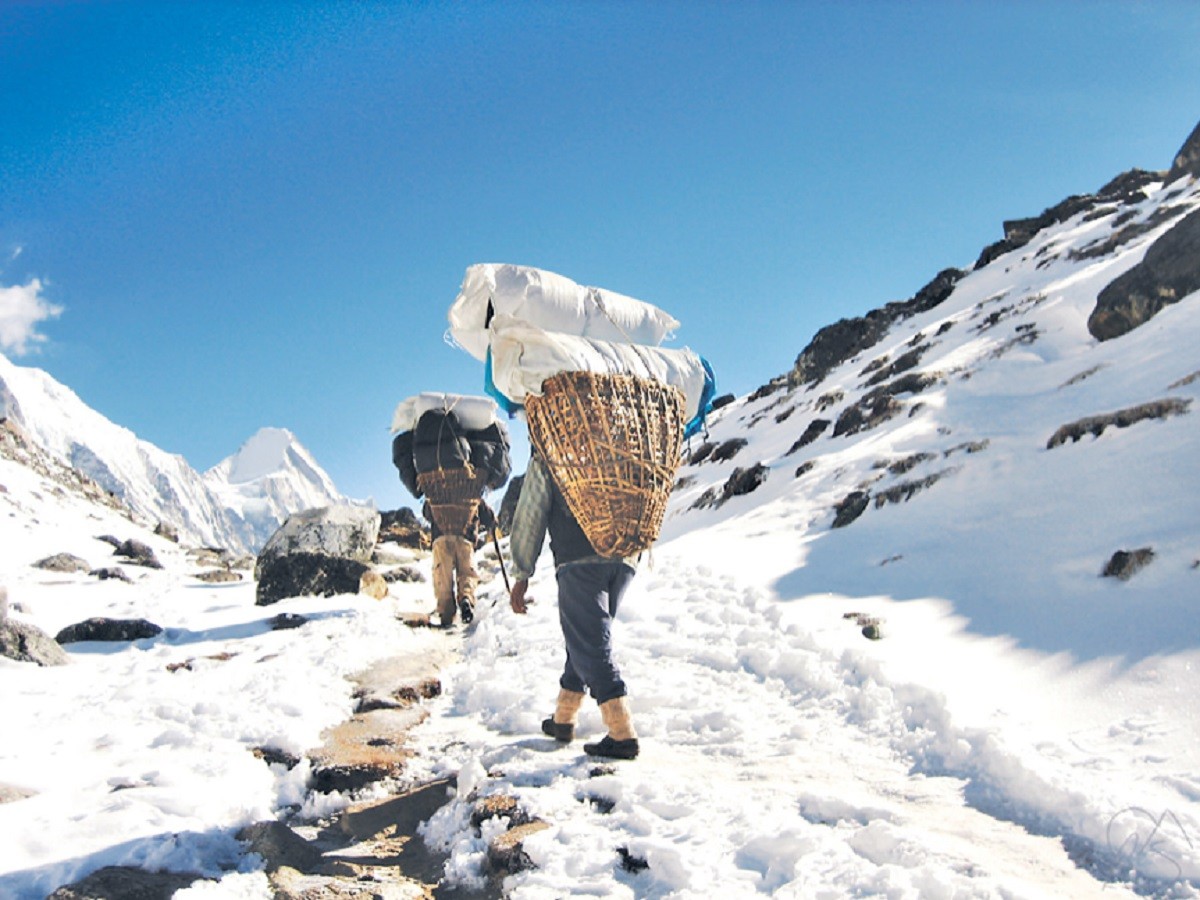
The journey between villages in the Everest region is where the porter’s experience becomes truly visible. You will notice how the Everest route is rarely flat, as the stone stairs rise abruptly and the dusty paths are icy in various sections.
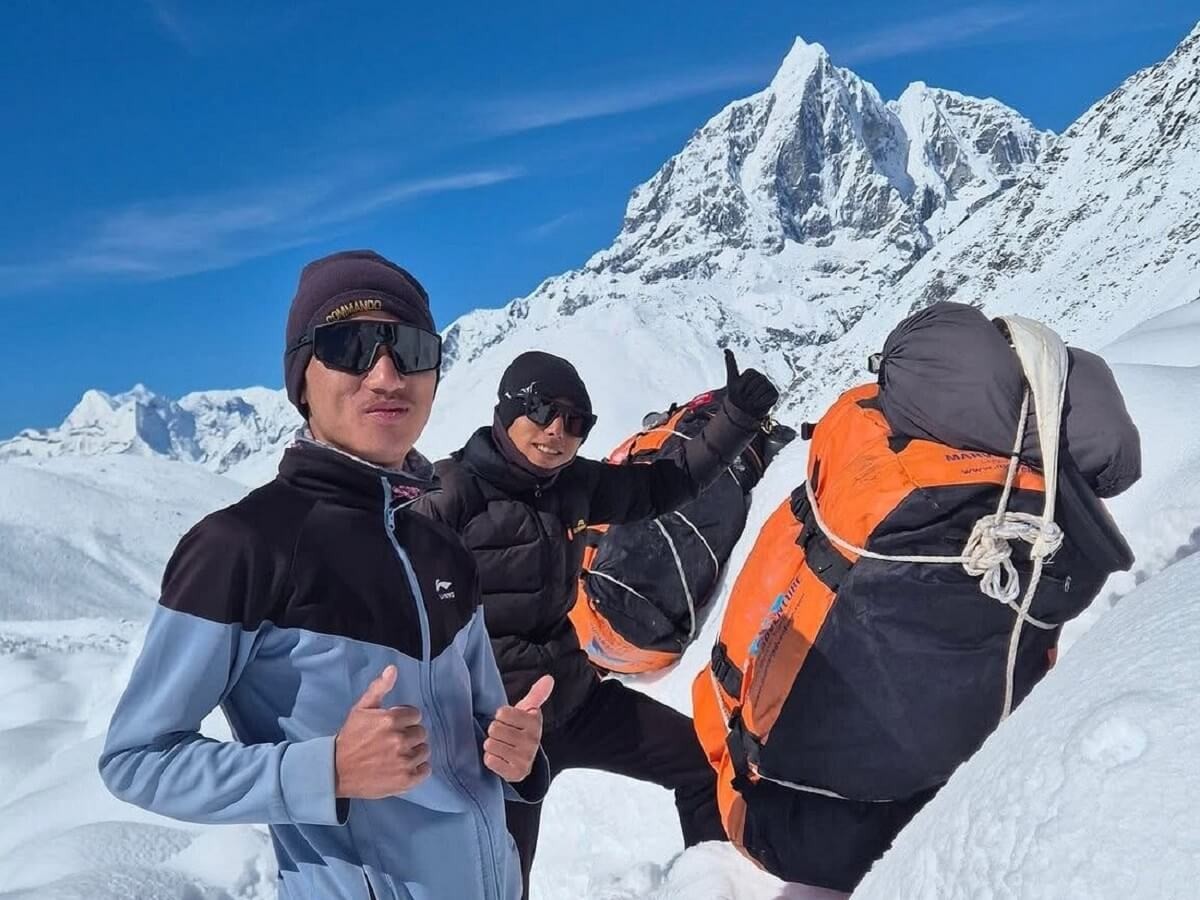
The weather can easily shift from bright sun to cold wind within a few moments. A porter carrying 20 - 25 kgs at 3,800 meters, all while facing these terrain challenges, is something that most trekkers can never imagine.
We’ve noticed something while trekking with our clients: the porters don’t rush. They simply move with a speed that may look slow but covers ground efficiently. Every pause they take is tactical and not desperate.
When one of our clients asked how porters can trek for a whole day while carrying more than 20 kg, Dawa explained his approach.
“I understand exactly when to slow down, rest briefly and how to distribute effort across a long day.”
Teahouse Life
By late afternoon, the group reaches the next teahouse. The trekkers settle into their rooms, and the guides review the next day’s plan. Our porters carefully place the duffle inside, then step back outside.
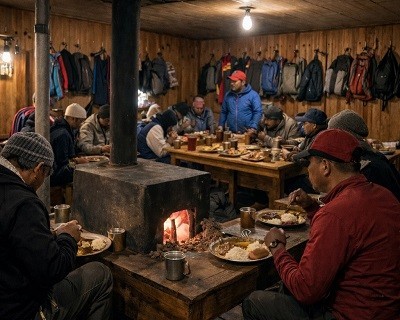
Inside the teahouse life of Nepal is where you get to see a porter unfold himself in his most human form. Someone is spreading a deck of cards on the table. Friendly teasing is going around about who slightly slipped on the icy corner.
Around the table, the stories circulate about difficult clients, the weather and the trouble they had earlier in the route. This is the side of the trek that rarely makes it into photographs or travel blogs.
The porters usually sleep in simple quarters. Sometimes it’s a shared room with the trek support staff. Sometimes it’s near the kitchen. Marvel Adventure, as a company, makes sure our porters have proper sleeping arrangements, and it’s non-negotiable.
The Physical and Mental Struggle
The Himalayan trekking porter faces challenges that most trekkers will never even witness, and understanding these challenges will help you know the true backbone of every Everest expedition.
Weight vs Altitude
At 4,000 meters, the 20-25kg feels completely different from what it does at a lower altitude. The air is thinner, and every breath delivers less oxygen. For a porter, the backpack weight doesn’t change, but the effort required to move it doubles.
At higher elevations, the air becomes thinner, steps become smaller, and pauses become slightly more frequent. Above Dingboche (4,410 m), you will more often see your porter take a stop, shift the namlo, roll his shoulders and continue. This isn’t a weakness; it’s the body negotiating with the mountains.
A strong porter is someone who carries responsibly rather than someone who carries more than necessary. We carefully monitor the load limit as we believe that strength should never be exploited.
Endurance and Mental Strength
When you are above 4,000 meters, endurance isn’t just physical. It’s also mental that isn’t visible. After countless treks in the Khumbu region, we’ve learned that the porter’s untold stories are often about patience, not pain.
During your EBC trek, the weather might change unexpectedly. Sometimes the day stretches longer than planned. Sometimes you get tired or frustrated. However, you will rarely notice your porter react outwardly as they are more focused on their rhythm.
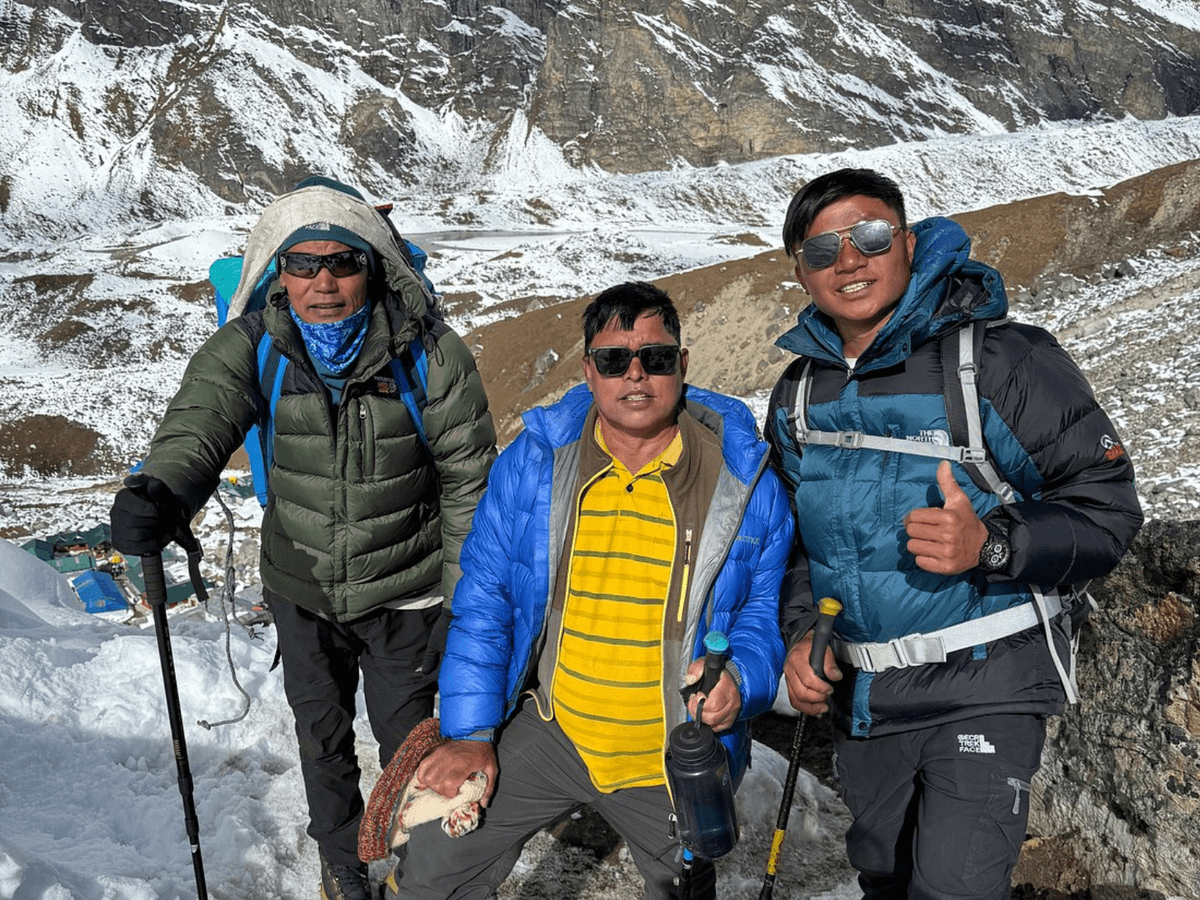
Sukra, one of our experienced porters, shared his silent coping mechanism:
Sometimes I count steps, sometimes I focus on the prayer flags that I see in the distance, and sometimes I think of the family responsibilities waiting at home.
So, it’s very clear how their motivation is based on their pride in work, financial necessity, loyalty to the team, and their connection to the Himalayan culture that truly defines them.
Safety Risks Porters Face
The safety risks that porters face are often invisible to most of the trekkers. Even Sukra, who has completed this trail multiple times, needs to carefully navigate the shaded areas, as icy stones there can be slippery sometimes.
What people don’t realize is that these porters are not immune to the mountains. There was one morning above Dingboche when one of our porters, who had been joking the evening before, sat unusually quiet at the morning tea. No drama. No announcement. Just a softer voice. In reality, the altitude doesn’t care how experienced you are. Push a little too hard and even the strongest bodies must adjust.
The porters often feel the pressure to keep moving for the team, for the clients, and for the schedule. And sometimes in this process, they absorb discomfort longer than they should.
We’ve had to turn porters back, insisting that they descend and rest. It’s never easy, but it’s necessary. Our operational model strictly prioritizes people over profit margin, and we don’t regret that.
Untold Interaction with Trekkers
You can’t even imagine how many insights you could get about the mountain community when you are heading towards the Everest Base Camp with a porter. The relationship between porters and trekkers goes much deeper than people usually imagine.
Silent Observers of Trekkers Behavior
Porters notice more than most trekkers ever realize. They notice who stops talking halfway up the climb and who suddenly becomes interested in their boots instead of the views. The sense of hesitation before you even admit it to yourself.
Dibash, one of our senior guides, often shares how porters alert him when they notice someone in the group looking unusually pale, short of breath, or quietly struggling on the trail.
Long before a trekker says, “I am struggling a bit”, someone a few steps behind has already noticed. And when you see someone carrying more than 20kgs who is silently reading the energy of the entire group, you truly begin to feel the human side of the EBC trek.
Porters as Guide and Protectors
When someone in the group starts struggling, it rarely needs to be announced as a porter has already noticed. The Everest trail Sherpa guide manages the route and the decisions, while the porter watches every detail.
A lot of our clients wonder, “What happens if I get sick on Everest Base Camp?”
You may not even realize it at first, but you will feel someone walking a little closer behind you. Not crowding you. Just present close enough to reach out if you feel uneasy. They might offer you some water even before you think to ask, or simply shift the angle of their load so they can keep you in their vision all the time.
No Everest rulebook says, “Watch for the sway in trekker’s balance” or “Listen to the change in breathing”. It’s simply the instinct built from multiple treks on the trail. It’s the experience that recognizes your discomfort even before you admit it to yourself.
Humour and Camaraderie
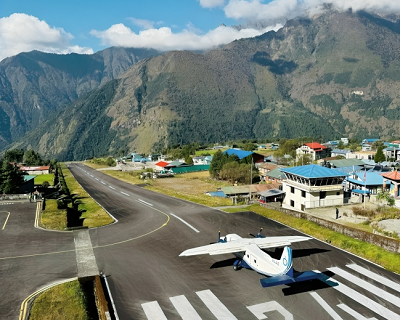
As you start trekking from Lukla to EBC with our team, you will quickly notice the presence of humour in these mountain people. By the time we reach Phakding (2,610 m) on the first day of trekking, you might already have a nickname in the porter’s group.
According to Dibash, these nicknames are based on the frequent trekking behaviours: the one who stops for photos on every turn, the one who overpacks and realizes it way too late, the one who says they’re fine but clearly isn’t.
The teasing is gentle and shared quietly among the porter team with inside jokes. These are moments that dissolve the invisible line between client and porter. Over the years, we’ve watched friendships form on the trail. Every season, we watch our porters, teaching trekkers a few Nepali phrases as they walk together.
Culture, Community and Identity
To fully understand the EBC trek from the porter's perspective, you have to understand where these men and women come from. You have to understand the people and culture of the Everest Region.
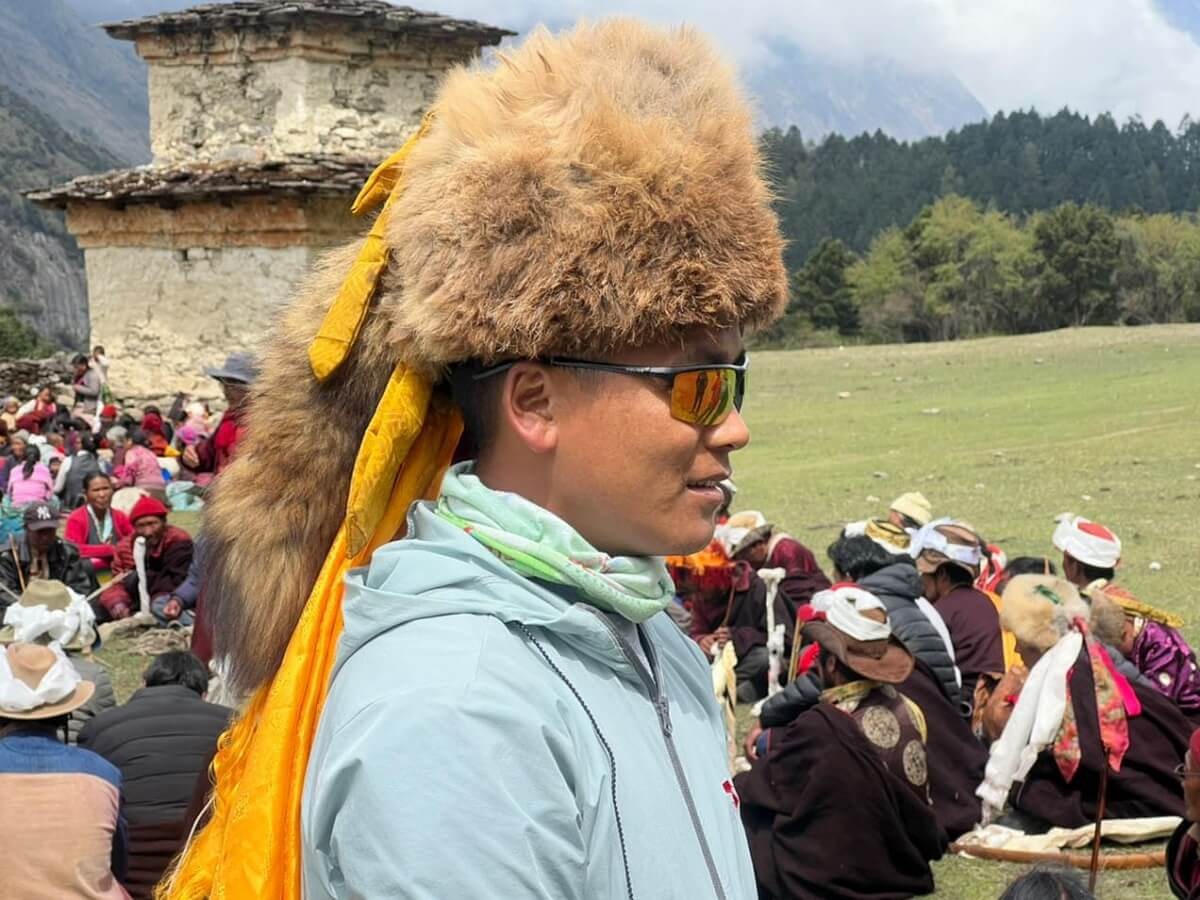
Sherpa and Porter Traditions
Most of the Everest Base Camp porters come from the villages of the Solukhumbu region or the surrounding areas. When the fields are green, most of them work as farmers. Once the sky clears in spring and autumn, they step onto the Everest trail.
Every year, the Sherpa community and the broader porter/guide network share traditions before the season for commercial trekking begins. Families gather, incense burns, and elders offer blessings for a safe journey. A tika is pressed on the forehead as a symbol of protection and trust placed in the mountains.
We’ve witnessed these send-offs multiple times and realized how much weight they carry. We watch the pride they hold in their work, though it’s rarely spoken aloud.
Spiritual Connection With the Mountains
Mountains are not an obstacle in the Himalayas. The people here call it Sagarmatha (Head of the sky) while the Tibetan culture worships it as Chomolungma (Goddess of the valley). These porters and guides describe the peaks as living guardians, and it clearly shows in their gestures.
We watch Phinjo, one of our most experienced guides, as he circles the chorten or mani wall clockwise, keeping the sacred stones on his right. He says:
“These gestures are automatic, learned from childhood and part of a Himalayan culture that shapes my identity.”
When we talk to our porters about why they keep returning every season, despite the physical stress. The answer is layered: family responsibilities, yes, but also the sense of belonging to something bigger.
Economic Realities
Tourism dependence is both a blessing and a burden in the Himalayas. Income from expeditions helps throughout the year. But back in 2020, when the pandemic silenced the Everest trail, it erased incomes overnight. Porters carrying loads to the Base Camp suddenly had nothing to carry at all.
We watched families struggle, return to farming or take up construction work. This experience clearly revealed how fragile the industry is, how dependent the entire communities are on foreign trekkers.
And yet, when the trail reopened, the porters returned with readiness. Because for them, the mountain is not temporary. It’s their livelihood, identity and responsibility.
Lessons Trekkers Can Learn From Porters
We’ve guided hundreds of trekkers along the Everest trail. Most of our clients arrive thinking the trek will test their lungs and legs. And honestly, it does. But many don’t realize how deeply they are influenced by the quiet presence of the porter walking with them.
Humility and Patience
You take a turn around for a breath on the steep sections above Namche. Behind you, a porter moves steadily with 20-25kg strapped across his forehead. You will witness how he does not rush to prove his strength. He does not slow down to dramatize his effort. He just walks with consistency.
You will see how he greets elders with a nod. He will step aside to allow the yak caravan move through. He will wait patiently while the trekkers fix their backpacks or add another layer against the wind.
From the outside, these gestures might seem small. But in reality, they define the life of a porter in Nepal. Experience on the trail shows how our clients slowly adjust their own behaviour because of these gestures.
Adaptability in Harsh Conditions
When you are trekking in the Himalayas, the morning sun can turn into afternoon wind. Teahouse accommodations vary depending on the altitude. A clear trail can become icy and slippery.
A Himalayan trekking porter doesn’t resist these changes. He simply adapts. From the porter's perspective, flexibility is survival; not in a life-threatening sense, but in a functional one.
Over the years, it has become clear that trekkers understand this lesson gradually. In the first few days, there are minor inconveniences. By the time we reach Dingboche, they accept that these changes are part of the journey.
Teamwork and Shared Responsibility
Even if the Everest Base Camp trek feels personal, it's never an individual accomplishment.
Behind every summit photo stands a team: the guide leading the navigation, the porter managing the load logistics and the trekkers supporting one another.
At Marvel Adventure, we have always emphasized that our trekker support staff operate as a unified team. The porter’s strength complements the guide’s leadership, while the porter trusts the guide’s judgement on decision-making and safety. When you walk with us, you begin to feel this rhythm: simple coordination built through years of experience in the Everest region.
Carrying More Than Just Bags
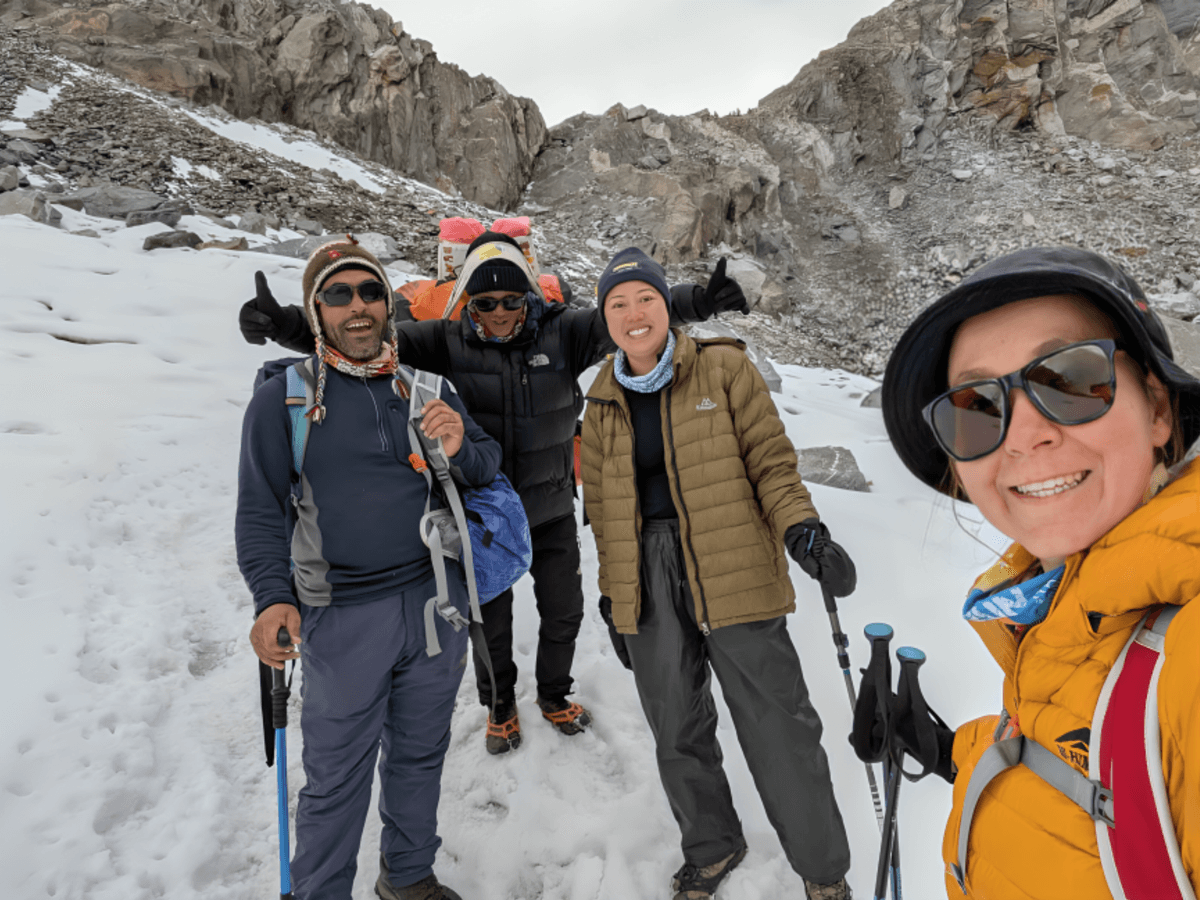
When we reflect on years of guiding trekkers to Everest Base Camp, one truth always remains there: The trek doesn’t move forward without the porters.
Yes, they do carry 20-25 kilograms of weight. But they also carry stories for generations to come and resilience forged in conditions that most people can’t even imagine. The EBC trek behind the scenes is their world. The EBC porter experience is not a side story. It supports the entire trekking system. The backpack weight they carry is measurable. The trust they carry is not.
Without them, most of us wouldn’t even dare to attempt the Everest trail. The truth is, they deserve more than acknowledgement. They deserve a trekking industry that values them as much as it values the mountains they help us reach.
At Marvel Adventure, the ethical treatment of porters isn’t a policy; it’s personal. We see them as a team. We listen when they speak and adjust when they need rest. So when we talk about ethical treatment, we’re talking about people we walk beside every trekking season.
Frequently Asked Questions
Is it ethical to hire a porter in Nepal?
Yes, it is completely ethical to hire a porter in Nepal. They are an important aspect of the trekking industry.
What makes the EBC porter experience different from what trekkers see?
Porters experience the trail from responsibilities of managing the weight and group flow, all while remaining unseen.
How much weight does an Everest Base Camp porter carry?
The EBC porters generally carry around 20-25 kg, depending on the ethical load policy of the company.
How does Marvel Adventure support its trekker support staff?
We ensure fair load limits, proper gear, insurance coverage, structured rest, and respectful working conditions throughout the trekking season.
How to hire a porter and guide for the Everest Base Camp?
If you are planning your Everest Base Camp Trek, book with Marvel Adventure for experienced guides and porters. We provide full support to make sure your Everest Base Camp trek is safe and smooth.